
Escorts in Rome
An evening in Rome means late dinners, wine in piazzas, and the particular pleasure of being somewhere that has mattered for two thousand years. Here's how to spend it properly.
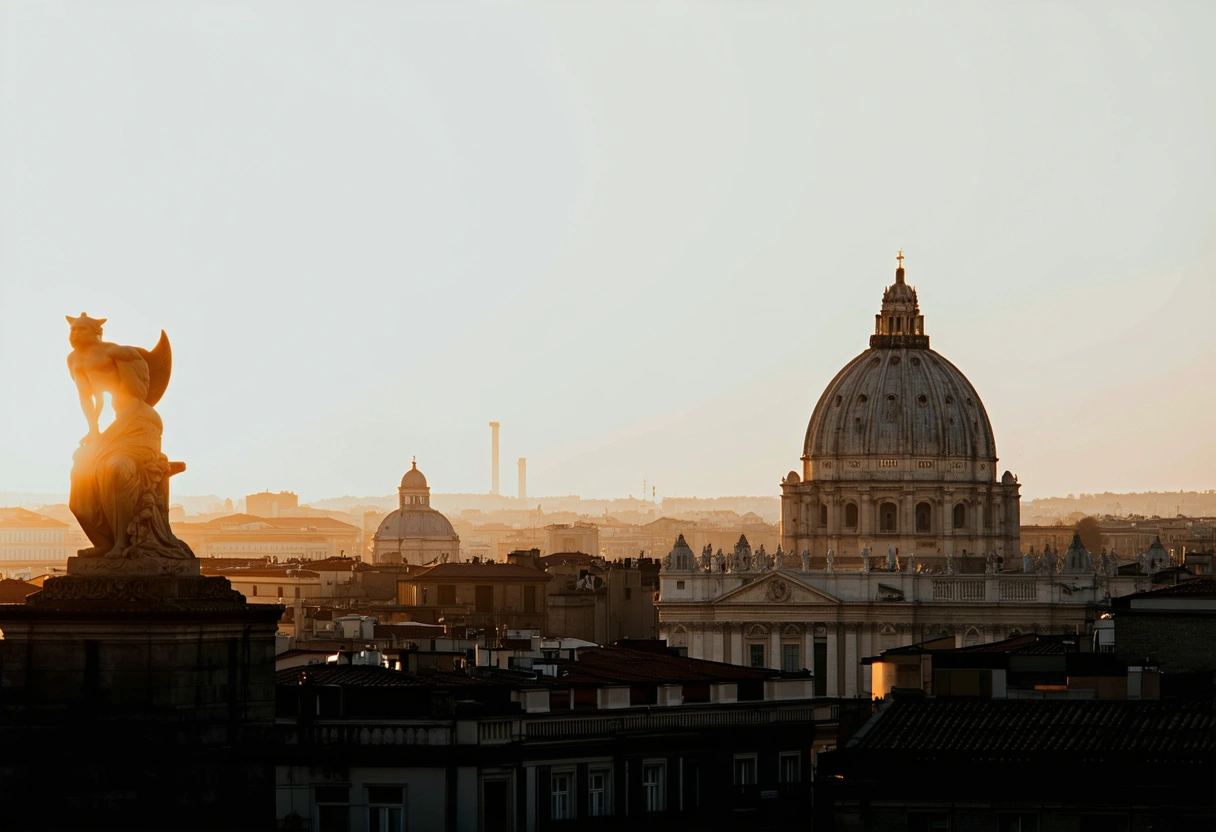
Dinner and the working evening
Romans eat late. Nine o'clock is standard; ten is not unusual. Trastavere fills with tourists and locals alike, the narrow streets loud and the restaurants shoulder-to-shoulder. If you want quieter company, cross the Tiber to Testaccio or head north to Monti, where the restaurants are smaller and the crowds thinner. Cacio e pepe, amatriciana, carbonara: the city's classics are best eaten simply, without fuss. Expect wine from the Castelli Romani hills south of the city, or look for bottles from Lazio's smaller producers. The meal lasts two hours easily.
Valentina Rossi is Roman and entirely unapologetic about it: loud laugh, strong opinions about food, and a genuine impatience with things done badly. She speaks English, French and Italian, and she knows the city's neighborhoods the way someone born into them does. An evening with her means she will steer you toward places that matter to her, not to guidebooks.
Leave the restaurant around eleven. The city is softer then. The Spanish Steps are finally manageable. Campo de' Fiori, busy through the evening with its bars and crowds, calms down after midnight. The Colosseum, lit at night, is a different thing entirely from the day: the tourists thin out, and the scale of it becomes clearer.
Late drinks and the small hours
Rome has no shortage of bars. Monti has several; Campo de' Fiori has more; the area around Piazza Navona is thick with them. They tend toward the ordinary: good enough, nothing distinguished, somewhere to sit and drink wine or a cocktail and watch the street. Weather matters. When it rains, which it does in winter with genuine commitment, the squares empty fast and the bars become refuges. The city looks different in rain: smaller, more intimate, the old stone darker and the light from windows more insistent.
The smaller churches are sometimes open late. The Pantheon, technically a church, closes at seven. Santo Ignazio stays open later and is nearly empty after eight, a moment to see it properly. These are quiet places to go between drinks, if you want them.
Most of Rome is walking distance from most of Rome. The streets are where the evening happens. Taxis are easy; the metro runs until half past midnight on most lines. If you are with an escort who knows the city, she will have opinions about where to go and why. Listen to her.
The art, if you want it
The Palazzo Altemps holds sculpture. It is open until ten past seven and nearly empty by then. The Vatican Museums close at seven. Galleria Borghese, set in the Villa Borghese gardens north of the city center, closes at five on weekdays. None of this fits an evening unless you want to cut dinner short, which you should not. Rome's museums are there for daytime. Evenings are for the city itself: the buildings, the piazzas, the particular light that happens at ten or eleven at night when the tourists have mostly gone to bed.
