
Companions in Paris
An evening in Paris demands more than a reservation. It asks for someone who knows the city's rhythms, its quarters, its actual hours.
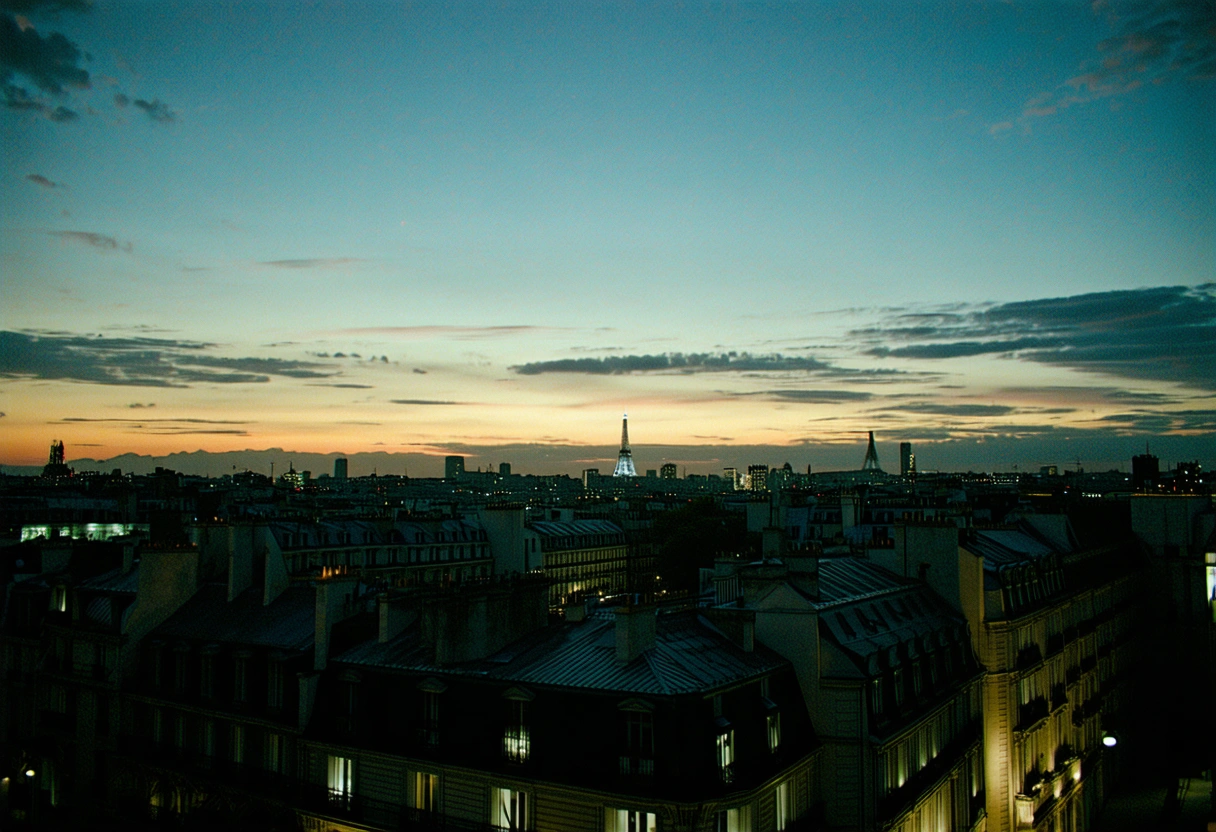
Where to start the evening
Dinner in Paris runs late. At nine o'clock, restaurants in the sixth arrondissement, around Rue de Buci or deeper into Saint-Germain, fill with people who have already had drinks elsewhere. The Marais, east across the Seine, keeps similar hours but runs younger; the fourth arrondissement's galleries close by six, but the bars don't quiet until well past midnight.
Amélie Rousseau grew up between the sixth arrondissement and her grandmother's house in Normandy, and she still keeps those rhythms. She speaks English and French, knows which restaurants will seat you at nine and which expect you at eight, and understands that a real evening doesn't mean hitting every arrondissement. She moves through the Left Bank as someone who lived there, not someone performing it.
Choosing a restaurant matters more than booking a companion. A decent brasserie on Boulevard Saint-Germain serves the same menu whether you arrive alone or with someone. Better to eat somewhere small—Montmartre has proper neighborhood places, the fifth arrondissement around the Panthéon has cafés that regulars use—and to spend the evening actually moving through the city rather than sitting across a table.
What the city looks like after dark
Rain in Paris is ordinary. November through March, expect it. The Seine's left bank near Île Saint-Louis floods a little when it rains hard, and the Marais's old streets—Rue des Rosiers, Rue Vieille du Temple—stay wet for hours. This doesn't stop anyone. People walk anyway. A companion who treats rain as expected rather than as interruption is worth more than one who doesn't.
The quieter quarters at nine at night are the ones tourists miss. The thirteenth arrondissement, south of the Latin Quarter near the Gobelins, has actual residents. The tenth, around Canal Saint-Martin, has students and couples but not crowds. The Marais remains busy, it's the one district that doesn't empty, but moving north from the Seine into the eleventh arrondissement, past Bastille, gives you streets where locals drink wine and eat without thinking about it.
Museums stay open late one evening a week, usually Wednesday or Thursday. The Louvre opens until 9:45 on some nights. The Musée d'Orsay, set in the old railway station on the Left Bank's south side, closes at 9:45 on Thursdays. These evenings are genuinely quieter than daytime hours; you move through them differently.
How to spend four or five hours
Start anywhere in the third or fourth arrondissement. Walk. The Marais's grid of streets is small enough to navigate without planning, and the bars and cafés there stay open. Order a drink, stay twenty minutes, leave. The Place des Vosges, at the heart of it, is never empty, but it's never crowded after ten either.
Cross back to the Left Bank via Pont Marie or Pont de l'Alma. Walk along the Seine itself, or move inland into the fifth arrondissement around Rue Mouffetard. The Panthéon looks different lit at night: more like a building, less like a photograph. Drink somewhere small. This matters more than any venue.
A companion who knows Paris actually works best as a companion who doesn't try to fill silence with facts. Amélie, who grew up here, moves through the city at its actual pace rather than at the pace a guidebook suggests. That's the difference between an evening that works and one that feels managed.
