
Companions in Paris
An evening in Paris works best with someone who knows how the city actually moves: the rhythms of dinner, which streets empty at midnight, what a rainy October feels like in the Marais.
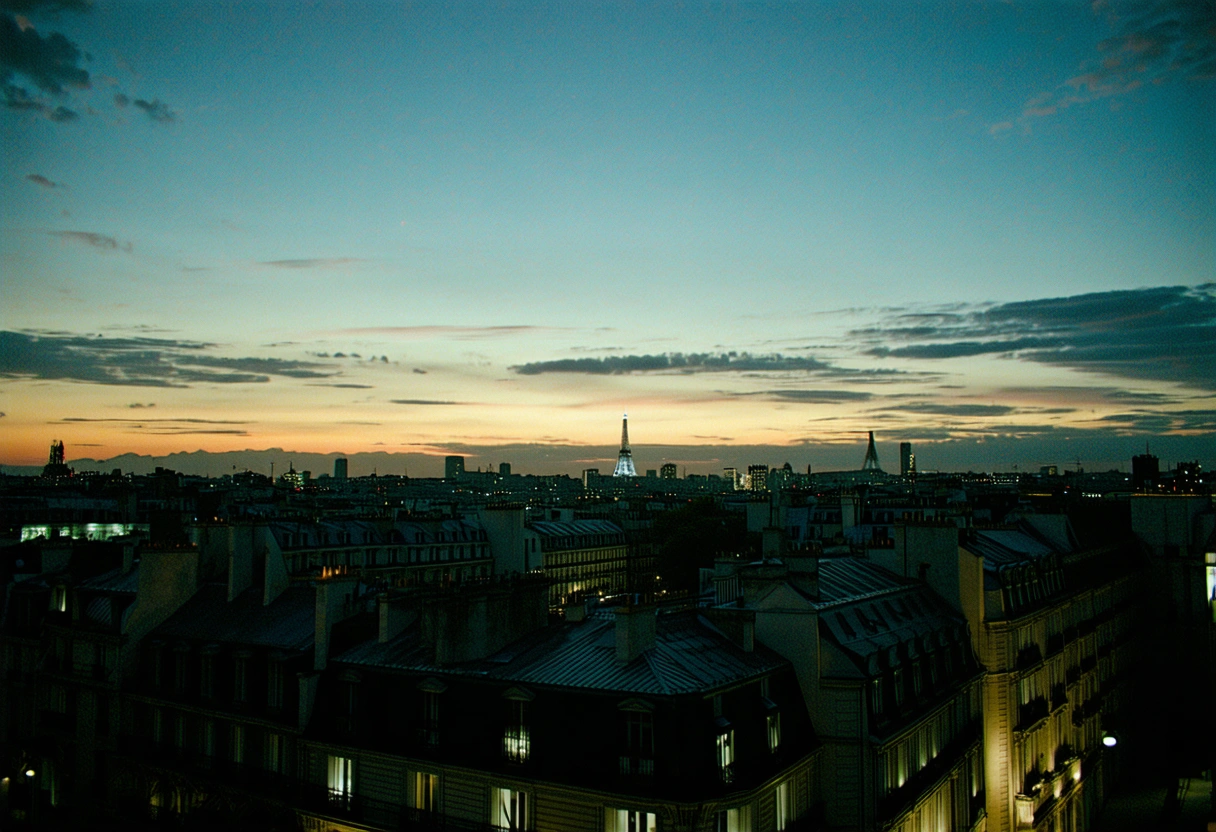
Dinner and movement
Paris companions should understand that nine o'clock is ordinary dinner time here, not late. The Left Bank around rue Mouffetard fills with people eating at tables still sticky from lunch service; Amélie Rousseau grew up between the sixth arrondissement and her grandmother's house in Normandy, and she carries that split—city manners, country patience—into an evening. You eat slowly. You do not rush between courses.
The Seine divides the city into habits. The Right Bank moves faster. The Left Bank lingers. Head to the fourth for the Marais if you want narrow streets and people who linger in doorways. The eleventh, toward Oberkampf, has younger crowds and bars that don't close early. Canal Saint-Martin stays quiet even on Friday: locals walk its edges, the water reflects apartment windows, and you can talk without raising your voice.
Rain here is not dramatic. It is steady and ordinary. October brings it. November assumes it. The city does not stop. Cafés stay full. The métro smells like wet wool and diesel. A companion who does not treat rain as inconvenience makes an evening better.
Museums after dark
Some museums keep late hours, check before you go. The Louvre stays open until 9:45 on Wednesdays and Fridays. The Musée d'Orsay closes at 6 most days, but crowds thin in the last hour. Neither is romantic or empty. They are still museums: people queue, guards stand in corners, the air is recirculated.
Better to walk. The first arrondissement around the Tuileries Garden empties completely by seven. The courtyard at the Palais Garnier is lit at night. You can stand and look without performance. Walk north through the second, into passages like Galerie Vivienne, where skylights still work: gas lamps in the cases, narrow shops shuttered, nobody but you.
What to avoid and where to go instead
Montmartre above the basilica draws tourists in groups, even at night. The area works poorly for two people who want quiet. Pigalle below it has energy but is not what you traveled for.
Instead, cross to the eighth arrondissement. Walk from the Élysée Palace west toward the Seine. The streets empty. Apartment buildings rise in cream stone. The only people are residents. It feels like you have entered something private, which is the point. Stop at a bar in the ninth, toward Rue Pigalle itself—the neighborhood bar, not the boulevard—where locals drink Kir and no one watches the door. This is Paris as it actually exists: ordinary, precise, interested in the moment rather than the image of the moment.
An evening works when a companion knows not to force anything. Dinner, a walk, a drink, silence. The city is already complete. You are simply moving through it.
