
Companions in Antwerp
Antwerp rewards an evening spent with someone who knows it. The city closes nothing down after dark, it just changes how it moves.
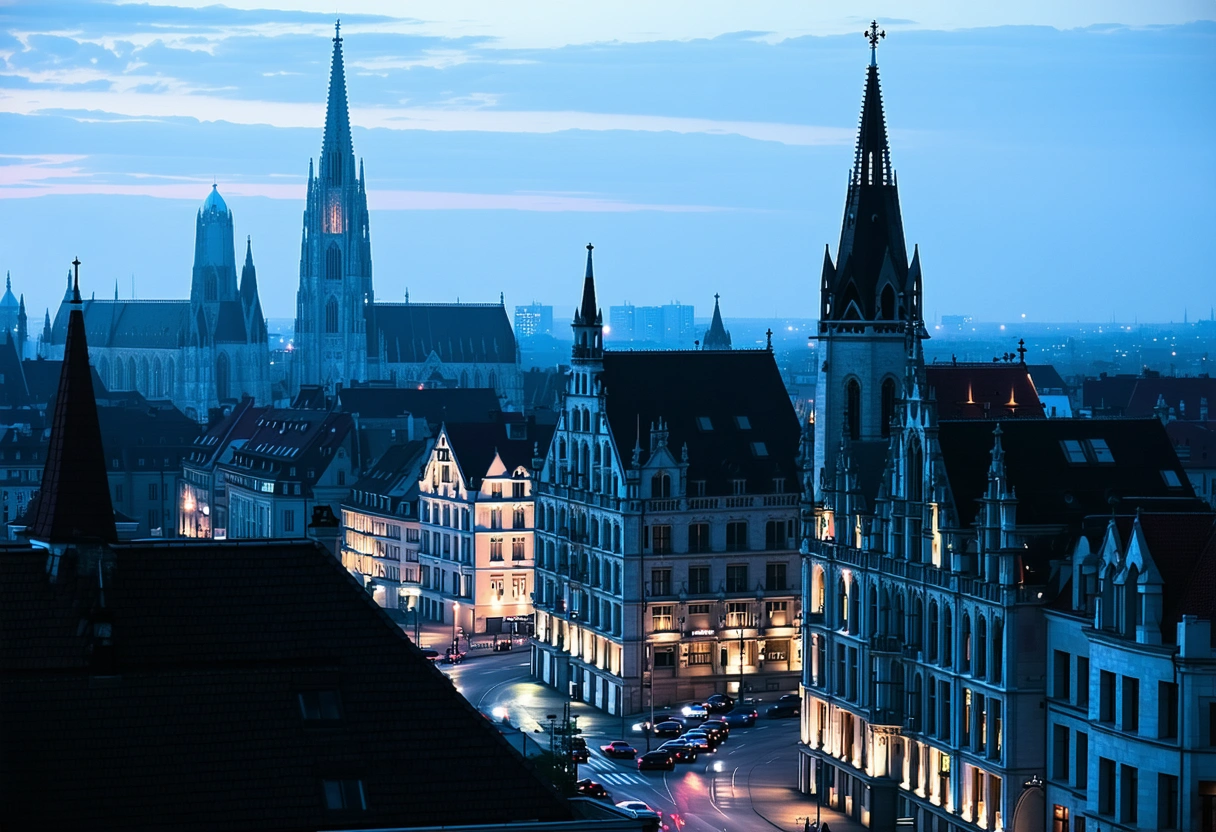
An evening in Antwerp starts late. At nine o'clock, Groenplaats, the square below the cathedral, still has empty tables. By ten, people are ordering their first courses. The restaurants around the square and along Nationalestraat serve solid Flemish food: waterzooi, croquettes, steak frites. None of it pretends to be revolutionary. You come for the company and the fact that the place works at that hour.
The grid of streets between Nationalestraat and the river, the medieval core where diamonds and fashion districts overlap, stays lit and occupied well past midnight. Sint-Paulusstraat has bars in converted merchants' houses. Korte Gasthuisstraat is narrower, always crowded, honest about what it is. Walk toward the Scheidt and the streets get quieter, the buildings taller and older.
Sanne Bakker lives in this city and studies design here; she knows which corners feel right at different hours, and she moves through Antwerp like someone who chose to be there rather than ending up in the default evening. She speaks English and Dutch, and she pays attention to the actual shape of a conversation.
The MAS and the river quarter
The Museum aan de Stroom sits on the Scheidt's western bank, ten stories of sandstone that opened in 2011. It is lit at night. Walk the quays afterward—Tacsimstraat on the waterfront, Jordaenskaai on the other side of the dock—and you move between dark water and the city's older face, the cranes and warehouses that haven't been converted into anything else yet.
This quarter is not social in the way the center is. It's colder. The river smells like river. If it rains—and autumn and winter rain in Antwerp is persistent, fine, and relentless—the wet stone and the dark water make the landscape feel legitimate and actual rather than staged for visitors. There are fewer people here, which is precisely why to be here.
Eating and drinking in the middle
The center of Antwerp tastes like beer, seafood, and cream. Coquilles Saint-Jacques. Sole meunière. The beer selection is standard for Flanders: Duvel, Orval, Westmalle, local brown ales you won't see elsewhere. Many bars in the Groenplaats area and around the cathedral precinct are ordinary: they serve food, they have regulars, they don't perform anything.
The neighborhoods radiating from the cathedral have restaurants and bars in different densities. Pelgromstraat—quieter, more residential, a five-minute walk north—has smaller places with less theater. Meir, the main shopping street, drains of pedestrians after dark; the bars along it feel temporary by comparison.
If the evening stretches, move into the streets west and north of Groenplaats. De Coninck, Ten Haag, Haarlem: these blocks are where locals actually drink, and the energy is steadier and less performed. A companion who lives here will steer without announcing it, suggesting a bar or a street the way someone suggests a route they've taken before rather than a destination they think you should see.
