
Escorts in Vienna
Vienna rewards the evening seriously. If you want an escort who understands how the city works after dark, Johanna Weber knows it from the inside.
Where to eat and when
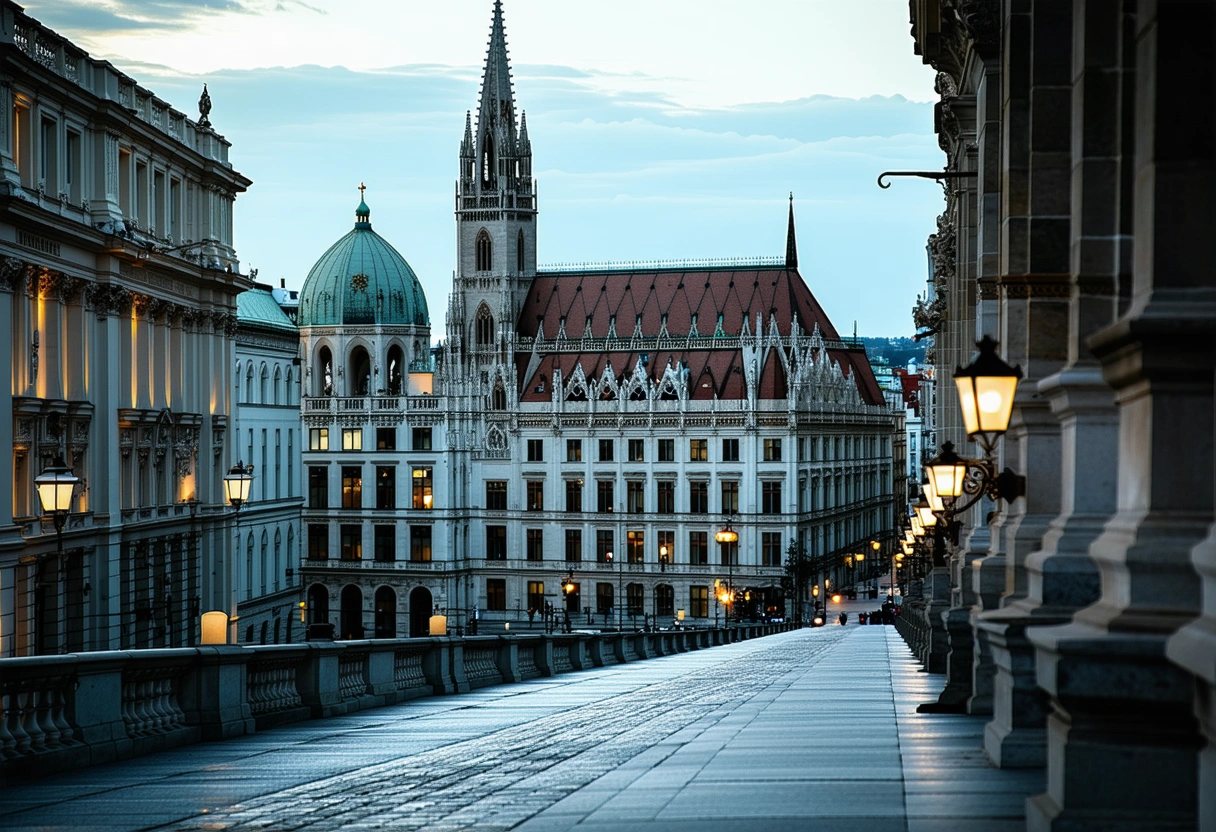
Dinner in Vienna happens late. Nine o'clock is ordinary; restaurants in the Innere Stadt fill properly around half past. The Danube Canal district, Donaukanal, has moved toward casual and younger in the last decade, with small wine bars and kitchens that stay open past midnight. The old centre, around Stephansdom and Neuer Markt, remains formal and expensive. Grinzing, the wine village north of the city, draws tourists reliably, and the wine is good if you know which tavern to choose.
Johanna Weber spent years in Vienna and carries a doctorate she rarely mentions, the kind of schooling that teaches a person how cities actually work. She speaks English, German, and French, the languages Vienna itself uses. Her manner is the manner of a place that takes its opera seriously.
Rain in Vienna is frequent and ordinary. The old streets in the First District stay dry enough under the arcades. The Ringstrasse becomes grey but manageable. Wear shoes that work on wet stone.
What to do after nine
The Staatsoper, the state opera house at the edge of the Innere Stadt, runs performances most nights. The cheapest tickets stand in the gallery, and the soprano hears better up there than the tourists in the stalls do. Concerts at the Musikverein on Karlsplatz happen most weeks. The Burgtheater, on Ring, stages plays in German; useful only if you speak it well.
Most escorts will prefer the evening to stay liquid and conversational. The wine bars in the Danube Canal neighbourhood keep reasonable hours. The squares of the Innere Stadt—Stephansplatz, Neuer Markt, Am Hof—are quieter after ten than you would expect a city centre to be. Vienna is not loud after dark. It is precise, ordered, and reserved.
The Leopold Museum in Museumsplatz stays open late on Thursday nights during summer. Most evenings, though, the museums are closed and the city belongs to its residents and the people they choose to see.
The structure of the city
The Innere Stadt is the oldest part: medieval and Habsburg, narrow streets, expensive. The First District, technically: where Stephansdom stands, where most tourists spend their time, where dinner costs accordingly.
The districts around it—the Second, Seventh, Eighth—are where Viennese people actually live. Neubau, in the Seventh, has cheap wine bars and used bookshops. Josefstadt, the Eighth, is where the real Vienna drinks coffee in the morning. These neighbourhoods are ordinary in the way that matters: ordinary to locals, with habits that make sense once you understand them.
Schönbrunn Palace sits southwest of the centre, in the Thirteenth. It is large, formal, and exactly what it appears to be. The park surrounding it is genuinely pleasant. The walk there takes thirty minutes from Stephansplatz; the tram, the U4 line, takes ten.
An evening with an escort in Vienna works best when the escort understands that the city values precision and discretion equally. Johanna Weber embodies both. She knows which wine bars stay open, which parks stay safe, and which parts of the city reveal themselves only to people who already know the habits.
