Gezelschapsdames in Rotterdam
Rotterdam beloont een zorgvuldig geplande avond. De structuur van de stad—uitgestrekt, herbouwd, eerlijk—werkt het beste wanneer u weet waar u heen gaat en waarom.
Getting oriented to the city
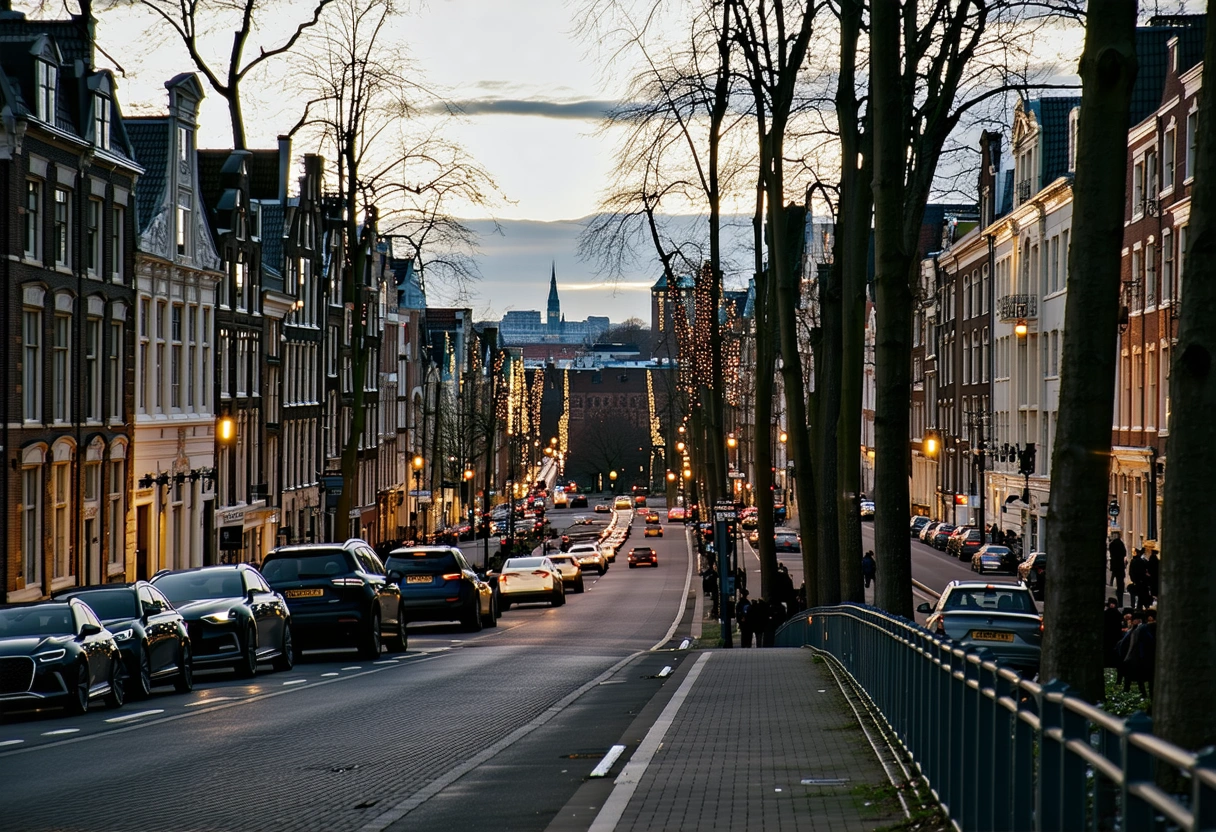
Rotterdam splits itself clearly. The Maas river cuts through the middle. North of it sits Centrum, where the train station stands and where most restaurants open around nine. South lies Feijenoord and the Museum Park. Between them, the Erasmusbrug, the swan bridge, connects everything and photographs itself constantly.
The Witte de Withstraat, running east from Centrum through Witte de With, is where the bar clusters thicken. Meent carries restaurants. Blaaktaal, further out, is quieter. Delfshaven, the old harbour district to the west, empties quickly after dark. This matters. You want to choose your quarter depending on whether you prefer a crowd or just better sightlines.
Rain here is normal, not a problem. The post-war architecture—cubes, concrete, jutting angles—looks better in grey light than in sun. The Blaaktoren with its hollow cube apartments, the Museumpark modernist lines, these read properly when the sky matches. Bring an umbrella and settle in. Rushing looks odd in Rotterdam.
Where to spend an evening
Anouk de Vries works regularly in the city and is hard to miss; she's stopped trying to be ordinary, half-sleeved and architecture-obsessed enough that she'll notice a building you walked past without thinking. She books mostly with women. She knows Centrum's layout better than most visitors will learn it in a week.
Dinner happens in the Witte de With area or around the Meent if you want to eat after eight. The restaurants there serve through to late: this is standard Rotterdam rhythm, not late for the city. Nothing fancy required. The food is Dutch or Mediterranean. It works or it doesn't. Afterwards, the bars on Witte de With stay open until midnight or past it on Fridays.
Feijenoord, south of the river, is worth crossing to only if something specific draws you there. The Museum Park houses the Boijmans, the Kunsthal, the NAI. All close by six or seven. An evening there is really an afternoon. Delfshaven has its own bars and quieter restaurants, but you'll spend time getting there on the metro or walking, time that costs more than it gains.
The Maastoren rooftop bar in the Witte de With area gives you the river and the skyline. It's ordinary in most cities. Here it's the actual view of Rotterdam: not sentimental, just accurate. Worth the trip up.
What to expect
The city is not small on foot. Walking from Centrum to Witte de With takes fifteen minutes. From there to Feijenoord, you need transport. This shapes an evening. Plan by geography, not by whim. Pick your district and stay in it. Anouk de Vries and other companions familiar with Rotterdam will know the practical sense of this; they move efficiently.
Weather and time matter here more than in other cities. In November through January, dark comes by five. The rain doesn't stop the bars, but it does change rhythm. Locals expect you to carry a coat and not complain. Neither should you.
The city doesn't perform for visitors. It shows you what it is: built back, built honestly, built for living in and working. An evening spent well here is one you planned for specific reasons, not aesthetic ones. The night follows. The city stays as it is.