
Companions in Stockholm
Stockholm rewards evening plans made with purpose. Knowing the neighbourhoods, the rhythm of the city after dark, and who you're spending time with makes all the difference.
Where to go and when
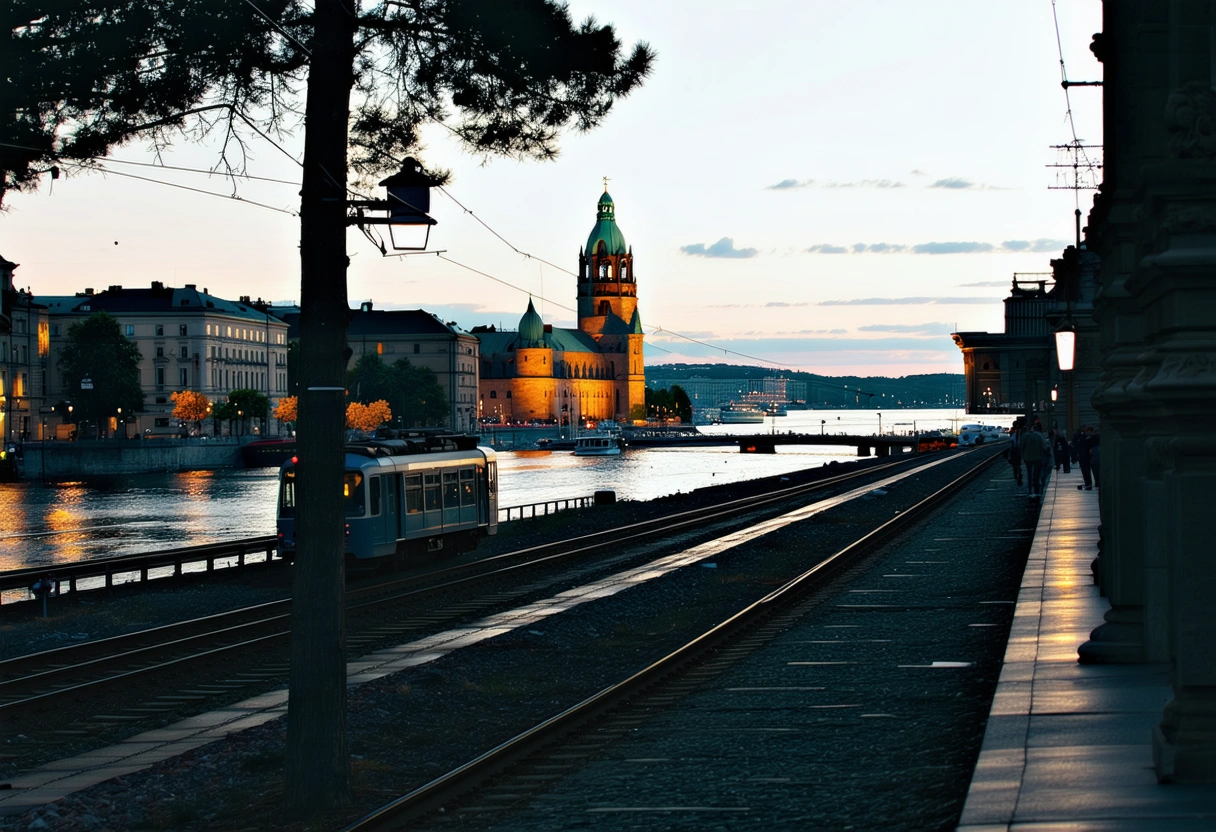
Stockholm's geography splits clearly. Norrmalm, the central district, has the main hotels and restaurants where dinner happens around nine o'clock: the Operahuset anchors the eastern edge, and Kungsträdgården spreads green and open to the south. Södermalm, across the water, is where Stockholmers actually live. The streets around Götgatan fill with bars and small restaurants by ten. Gamla Stan, the old town, empties of tourists by evening and becomes almost still, its narrow medieval streets dark and ordinary-seeming.
The city moves slowly in winter, fast in summer. From November through February, darkness comes at four in the afternoon; restaurants and bars stay open but the streets clear early. Rain is constant. Stockholmers walk through it without comment. Summer means light until nearly midnight, which changes everything: people eat later, stay outside longer, and the waterfront parks at Djurgården draw crowds until well past eleven.
Freya Lindqvist knows the city completely and moves through it with the kind of calm that people find contagious; she swims in the cold water year-round and speaks about it like it is the most normal thing in the world. She understands the seasons and what an evening actually feels like in each one.
How to plan an evening
Dinner first, usually. Norrmalm has established restaurants where reservations matter. Södermalm has smaller places: no reservations, you arrive and wait or don't. Gamla Stan caters to tourists with mixed results; unless you know a specific place, skip it.
After dinner, a bar. The distinction between restaurant and bar is loose, many serve food and drink equally. Norrmalm bars near the water are straightforward. Södermalm has denser options. Strandvägen, running along the water north of Norrmalm, has clubs and lounges, though most are ordinary. Blasieholmen, the island between Norrmalm and Djurgården, hosts the Nationalmuseum and stays quiet after dark except for concert nights at Berwaldhallen.
Stockholm has concert halls and theatres — the Konserthuset, the Operahuset, Dramaten — if an evening coincides with something worth seeing. Otherwise, the city is about movement between neighbourhoods. You walk between them. The distances are short.
A night that works: dinner in Norrmalm around eight or nine, then a bar in Södermalm by eleven. This covers the city's actual evening energy without strain. Later, if the evening continues, a late-night bar in Norrmalm near the water, or a club around Strandvägen. Most close between two and four in the morning.
What to know
Stockholm is expensive and Stockholmers dress plainly even when spending money. Dark clothes. No elaborate jewellery or obvious wealth. The city's tone is understated.
The language is Swedish, but English works everywhere in central areas. North of Norrmalm, towards Östermalm, the residents are wealthier and the bars more formal. South of Södermalm, towards Södermalm's edges, things become residential quickly.
Winter changes the city's feel completely: fewer people out, earlier nights, a different tempo. Summer is the obvious season but Stockholm in November and December has its own appeal if you don't mind the cold. Spring is brief and unreliable.
An evening is best built with someone who knows what the city actually offers rather than what postcards suggest. Specificity matters. A real bar over a famous one. A quiet street over a crowded one. The city reveals itself this way.
