
Companions in Copenhagen
An evening in Copenhagen asks for company who knows the city's rhythms: where to eat at ten, which canal to walk at dusk, how the rain softens the old streets.
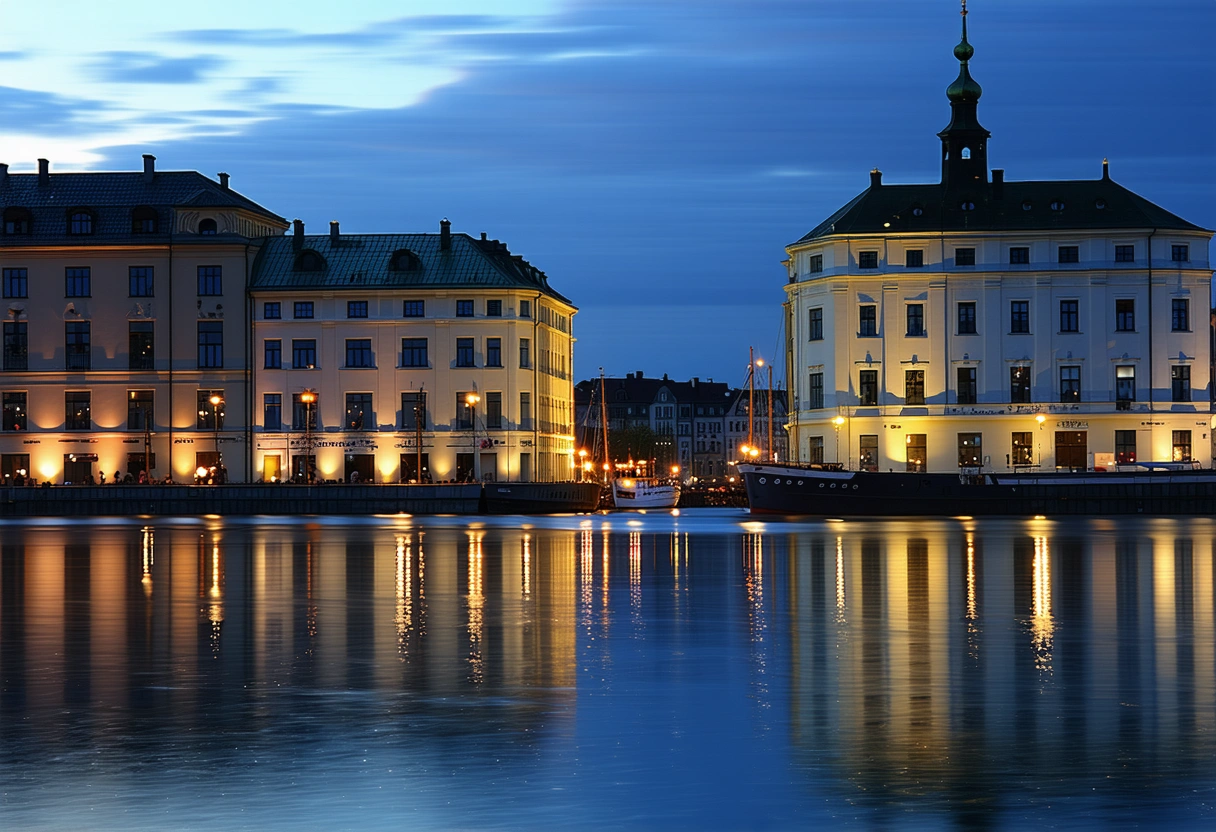
Evening pace and where to begin
Dinner in Copenhagen happens late. Nine o'clock is ordinary; tables fill at half past. This matters when you are planning an evening. Head to Nørrebro or Vesterbro if you want the density of restaurants and bars within walking distance. Nørrebro's Rantzausgade has long been the neighbourhood's main drag: younger, louder, full of people who moved here when rent was cheaper. Vesterbro, across the city, is less self-conscious. The two neighbourhoods feel different in ways that matter if you will spend hours in one of them.
Léa Moreau arrived in Copenhagen six years ago for a design residency and has not left. She speaks English, French and Danish: the Danish matters more than it sounds, a sign she settled rather than passed through. She knows the old quarter, Indre By, and the newer neighbourhoods with equal ease. An evening with someone who understands both the tourist paths and the streets locals actually use shapes itself differently.
If the weather is clear, walk. The canals—Nyhavn, Christianshavn, the length of Frederiksstaden—show differently from a boat or a café table. The city in rain is different again: narrower somehow, the old facades darker, the light from bars and restaurants spilling onto wet stone. This is ordinary Copenhagen. You will see it.
What the evening holds
The Carlsberg Glyptotek sits on Dantes Plads in Indre By. Most evenings it closes at ten; some Thursdays it stays open later. Rosenborg Castle, north in Øster Voldgade, keeps similar hours. Neither is a night venue, but they matter if your evening is long and you both like looking at things. The National Museum of Denmark is closer to Nørrebro, on Prinsens Palais.
For music: Jazzhus Montmartre in Nørrebro hosts live jazz most nights. Pumpehuset, also in Nørrebro, books rock and electronic acts. These are the places people actually go, not names borrowed from guidebooks. Concert schedules shift. Check beforehand.
Bars in Vesterbro tend toward beer and quiet corners. Nørrebro bars are louder, younger, denser with other people. This is not a judgment, it is the shape of the neighbourhoods. Strøget, the long pedestrian street through central Copenhagen, fills with tourists and drunks after dark. Avoid it unless you specifically want that.
A late drink in Christianshavn, the old sailor quarter south of the city centre, is calmer. The neighbourhood has gentrified steadily over decades. It is still itself—old buildings, narrow streets, the sense that something happened here—but young professionals live there now. The change is visible if you know what to look for.
Rain and other practicalities
Copenhagen in summer is crowded and the light lasts until nearly midnight. Winter is dark by five in the afternoon. Spring and autumn are ordinary: cool, changeable, damp. The rain here is not melodramatic. It is steady and fine and will soak you if you stand in it for hours.
The city is compact. Taxis work, or the metro runs south and north efficiently. Cycling is how Copenhageners move; if you are thinking of hiring bikes, assume the city will seem faster and shorter once you are on two wheels.
Nyhavn looks exactly like the photographs. It is full of tourists. This does not make it bad, the light on the water in late afternoon is real, but know what you are walking into. The old town, Indre By, is older and quieter one block east.
An evening works best when two people already know what they want. Léa, with her years of habitation and three languages, is the sort of companion who can shift between what she knows and what you want to find out. The city reveals itself differently to someone with actual stakes in it.